

AI search optimization is the work of making your business easy for an AI assistant to understand, quote and recommend correctly. Google states there is no special markup or AI file required to appear in its AI features. What actually decides whether you get cited is whether your pages are clear, accurate, crawlable and consistent with everything else published about your business.
Key takeaways
- Google says there are no additional requirements and no special schema needed to appear in AI Overviews or AI Mode
- Anyone selling you an AI text file or proprietary GEO markup is selling something Google says you do not need
- AI assistants misattribute sources at high rates, so what they say about you is a business risk worth monitoring
- 45 percent of consumers now use AI tools to find local businesses, up from 6 percent
- Clicks to regular results fell from 15 percent to 8 percent of visits when an AI summary appeared
- The real work is clarity, accuracy, consistency and being the source worth quoting

What Google actually says you need to do
This is the part the industry keeps quietly skipping, because there is more money in the alternative. Google's own documentation on AI features in Search states that there are no additional requirements to appear in AI Overviews or AI Mode, and no other special optimizations necessary. It goes further and says you do not need to create new machine readable files, AI text files, or markup, and that there is no special schema.org structured data to add.
What Google recommends instead is the boring list. Meet the technical requirements for Search. Follow the existing policies. Create helpful, reliable, people first content. Make sure the page is crawlable. Look after page experience. Use good images and video. Keep your structured data aligned with what is actually visible on the page. Keep your business profile information current.
So when an agency offers to sell you an AI optimization file, or a proprietary GEO schema, the honest response is that Google has published the opposite. That does not mean nothing has changed. It means what changed is the standard you have to meet, not the format you have to submit.
Users clicked a regular search result on 8 percent of visits when an AI summary appeared, against 15 percent when none did. Only 1 percent clicked a source link inside the summary.
Pew Research Center, July 2025, 68,879 searchesOf consumers now use AI tools such as ChatGPT to find local businesses, up from 6 percent, making assistants the third most used source after Google and Facebook.
BrightLocal Local Consumer Review Survey, 2026Quote attributions returned partially or entirely incorrect by ChatGPT search in a controlled test. It admitted it could not answer only 7 times.
Tow Center for Digital Journalism, Columbia Journalism ReviewThe risk nobody warns small businesses about
Researchers at the Tow Center for Digital Journalism tested how accurately ChatGPT search attributes content. They took 200 block quotes from 20 publishers and asked the tool to identify the source. It returned partially or entirely incorrect answers 153 times, and admitted it could not answer on only seven occasions. The study also found publishers were misattributed regardless of whether they allowed crawlers, had licensing deals, or blocked access.
Translate that into a local business context. An assistant can confidently tell a prospective customer your hours, your service area, your pricing or your specialisms, and be wrong, with no signal to the person asking that anything is off. You will never see the query. You will simply not get the call.
That is why we treat monitoring what assistants say about a business as part of the job rather than a curiosity. It is the only way to find out that ChatGPT thinks you closed, or that you do not serve a suburb you have worked in for a decade.
Why the same work also protects you in normal search
Two things are happening at once. Fewer people click through when an AI summary is present, which Pew measured at 8 percent of visits against 15 percent without one. And more people are starting in an assistant entirely, which BrightLocal put at 45 percent for local business discovery, up from 6 percent.
Neither trend rewards keyword tricks. Both reward being the clearest, most specific, most verifiable source on a topic, because that is what a summarising system can safely repeat. The overlap with good traditional SEO is close to total, which is convenient, because you were supposed to be doing that anyway.
Step 1: Answer the question in the first two sentences
Assistants extract. A page that opens with three paragraphs of throat clearing gives them nothing clean to lift. State the direct answer plainly at the top, then expand underneath for the humans who want depth. Every page on this site now opens that way, including this one.
Step 2: Make claims specific enough to be quotable
Vague claims are unquotable. Best service in town cannot be repeated by a machine that has to stand behind it. A statement with a number, a place and a timeframe can. Compare we work fast against most residential jobs are scheduled within five business days across San Antonio and Boerne. Only one of those can be safely repeated.
Step 3: Keep structured data honest
Google's guidance is explicit that structured data should align with what is actually visible on the page. This is where a lot of sites quietly break their own credibility, usually with FAQ schema listing questions that no longer appear anywhere. We found exactly that on this site and fixed it. Mismatched markup is worse than none, because it is a signal that your data cannot be trusted.
Step 4: Be consistent everywhere you appear
Name, address, phone, hours, service area and service list should be identical on your website, your Google Business Profile, and every directory that lists you. Assistants reconcile multiple sources. When those sources disagree, the model either picks one at random or hedges, and neither outcome helps you. This is the same discipline as Google Business Profile optimization, applied more widely.
Step 5: Publish the things buyers actually ask
Cost ranges, timelines, what is included, how to tell repair from replacement, what happens on day one. These are the questions people type into assistants, and a page that answers one of them properly is a candidate to be quoted. A page about industry trends is not.
Step 6: Stay crawlable and fast
None of this matters if the content cannot be fetched. Check that your robots.txt is not blocking what you want read, that pages render without requiring interaction, and that mobile load times are not driving everything away before it loads. Google lists crawlability and page experience in its own AI features guidance for a reason.
Step 7: Check what assistants currently say about you
Ask several assistants for a business like yours in your area, and ask them about your business by name. Note what they get right, what they get wrong, and which sources they lean on. That is your baseline. Repeat it monthly. It takes fifteen minutes and it is the only feedback loop that exists for this channel today.
What is worth doing and what is being oversold
| Being sold as AI optimization | Reality | What to do instead |
|---|---|---|
| Special AI text files on your server | Google says no new machine readable files or AI text files are needed | Meet the standard technical requirements for Search |
| Proprietary GEO schema markup | Google says there is no special schema.org data required | Use standard schema that matches visible content |
| Submitting your site to AI engines | No such submission process exists for these features | Make sure the page is crawlable and worth quoting |
| Guaranteed AI Overview placement | Nobody can guarantee this, exactly as with rankings | Judge the work on citations earned and leads tracked |
| Writing content specifically for robots | Google asks for helpful, reliable, people first content | Write for the buyer, structure it so a machine can parse it |
| Ignoring it entirely as a fad | 45 percent of consumers already use assistants for local discovery | Get the fundamentals right and monitor what is said about you |
A practical monthly routine
Ask the assistants
Query two or three assistants for your service in your area, and for your business by name. Record what they say and which sources they use.
15 minutesLog what is wrong
Wrong hours, missing services, an old address, a competitor named instead of you. Each error usually traces back to a source you can correct.
10 minutesFix the source
Update the profile, the directory, or the page that contains the wrong information. Correct the origin rather than trying to argue with the model.
VariesPublish the gap
If assistants keep answering a question about your trade badly, that is a page worth writing. Answer it better than anyone else has.
OngoingRecheck next month
These systems update constantly. A correction that lands in one model may not have reached another. Treat it as a rolling task, not a project.
MonthlyWhere this is heading
Google is not being subtle about direction. Search Engine Land reported on August 10 that Google confirmed testing new buttons on its home page to push users toward its AI powered search features, and on August 14 that Gemini 3.7 Flash had begun rolling out inside Google Search, first in AI Mode for Google AI Pro and Ultra subscribers in English.
The practical read for a local business is not to panic and not to buy a special product. It is that the gap between a clear, accurate, well maintained web presence and a vague one is about to matter more than it ever has, because a summarising system punishes vagueness far more harshly than a list of ten links ever did.
Frequently asked questions about AI search optimization
Do I need special markup to appear in AI Overviews?
No. Google's documentation states there are no additional requirements to appear in AI Overviews or AI Mode and no other special optimizations necessary, and that you do not need new machine readable files, AI text files, or special schema.org structured data.
What is the difference between SEO, AEO and GEO?
They describe overlapping work. SEO aims at ranking in search results, answer engine optimization at being the answer, and generative engine optimization at being cited by generative systems. In practice the tactics converge on clarity, accuracy, structure and authority. Treat the labels as vocabulary rather than as separate budgets.
Can anyone guarantee I appear in AI answers?
No, for the same reason nobody can guarantee a number one ranking. There is no submission process and no placement to buy. Judge the work on whether your business is cited more often and whether tracked enquiries increase.
Do AI assistants get facts about businesses wrong?
Frequently. In a Tow Center study, ChatGPT search returned partially or entirely incorrect attributions for 153 of 200 quotes, and admitted uncertainty only seven times. The same false confidence applies to business details, which is why checking what assistants say about you is worth doing monthly.
Should I block AI crawlers from my site?
For most local businesses, no. Blocking removes any chance of being recommended, and the Tow Center found publishers were misattributed regardless of whether they blocked crawlers or not. Publishers with content licensing concerns are in a different position to a plumber who wants the phone to ring.
Has AI reduced traffic to small business websites?
Click behaviour has changed measurably. Pew Research found users clicked a regular result on 8 percent of visits when an AI summary appeared, against 15 percent without one. High intent local searches still produce calls, which is why local businesses are less exposed than publishers.
What kind of content gets quoted by assistants?
Content that answers one question clearly, states specifics rather than adjectives, and can be verified elsewhere. Prices in ranges, timelines, processes, and comparisons all work well. Broad thought leadership rarely gets quoted because there is nothing concrete to lift.
How do I check what AI says about my business?
Ask two or three assistants for a business like yours in your area, then ask about your business by name. Note errors and which sources they cite, correct the underlying source rather than the model, and repeat monthly. Fifteen minutes gives you the only feedback loop currently available.
Does structured data still matter?
Yes, standard structured data that matches the visible page. Google's guidance specifically asks that structured data align with visible content. Schema describing things that are not on the page undermines trust in your data rather than helping you.
Where should a small business start?
Make sure your business details are identical everywhere, rewrite your main service pages to answer their question in the first two sentences, check your structured data matches what is visible, and run the monthly assistant check. That is most of the available benefit, and none of it requires buying a new product.
Google’s Slow Spam Update Rollout Could Still Hit You
Facebook’s 2 Link Limit Is Real, But Not for Everyone September 29, 2026 Social Media Marketing Table of Contents Google's September spam update rollout began on September 24...
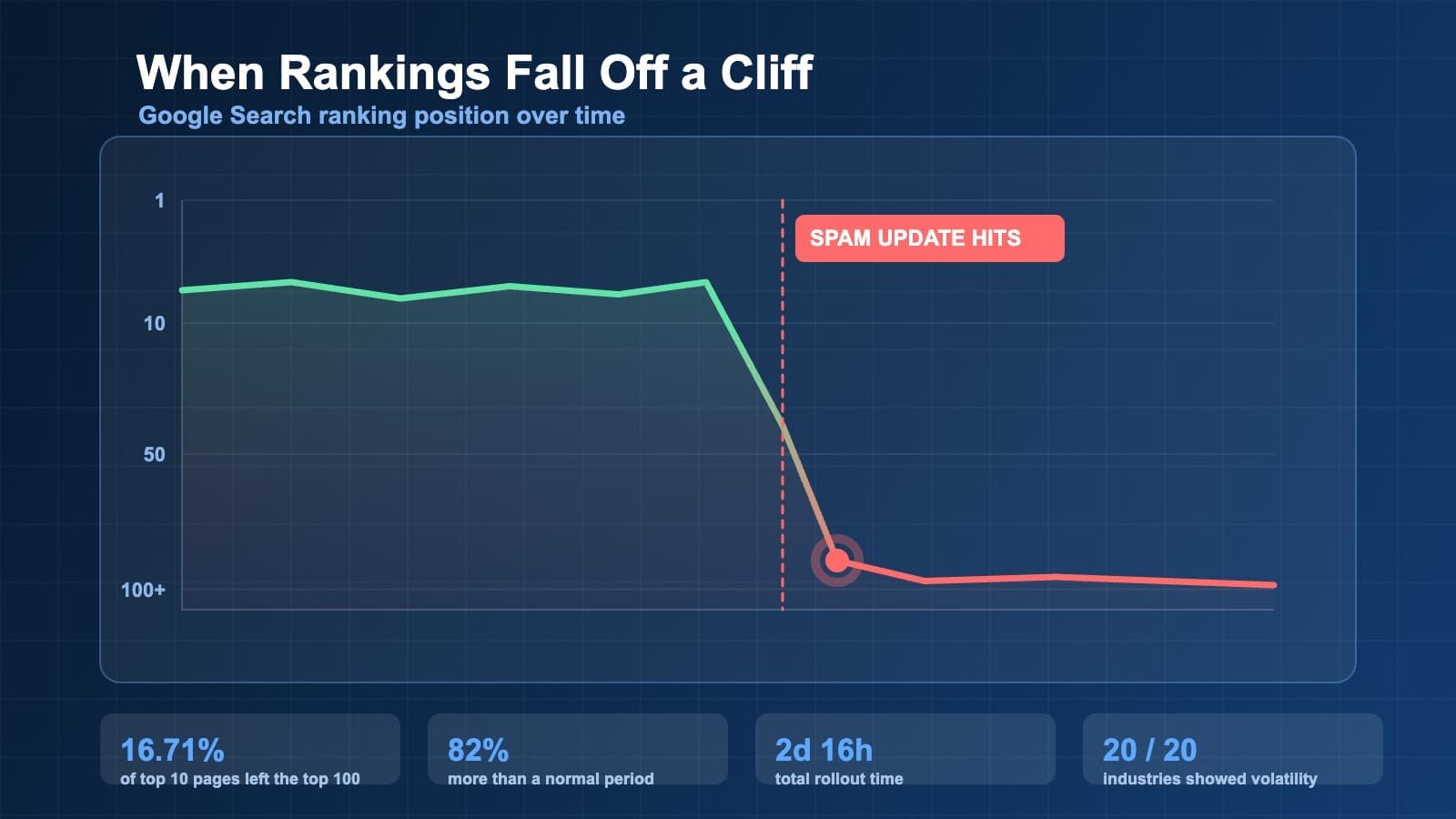
Google’s Spam Update Erased Rankings in Just Days
Google’s Spam Update Erased Rankings in Just Days September 1, 2026 SEO Table of Contents Google's August spam update knocked 16.71 percent of top ten pages completely out...
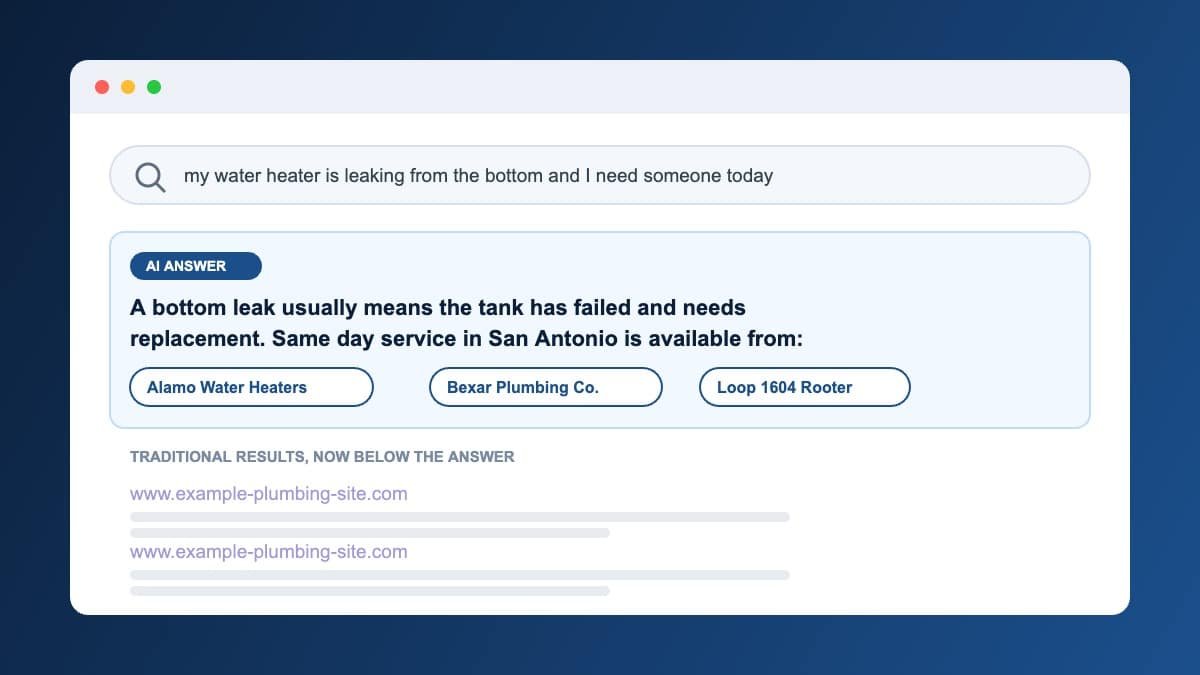
Google AI Search Just Changed How Customers Find You
Google AI Search Just Changed How Customers Find You August 20, 2026 SEO Table of Contents Google AI search now answers most questions on the results page itself,...
One Response